Hydroponics Glossary A-G

A
abscisic acid
A growth-inhibiting hormone.
abscission
The dropping of leaves, flowers, or fruit by a plant. This can result from natural growth processes (e.g., fruit ripening) or from external factors such as temperature or chemicals.
abscission layer
Specialized cells, usually at the base of a leaf stalk or fruit stem, that trigger both the separation of the leaf or fruit and the development of scar tissue to protect the plant.
absorption
The intake of water and other materials through root or leaf cells.
accumulated heat units
The number of hours in a growing season. Usually calculated at temperatures above 50°F, but can be calculated at other temperatures, depending on the crop. A day's heat units (above 50°F) are calculated as: Daily values are then totaled for the season, with values less than zero ignored (but not deducted from the total).
acid soil
Soil with a pH below 7 on a pH scale of 0 to 14. The lower the pH, the more acid the soil. See pH.
actinomorphic flower
A flower possessing radial symmetry. Any cut through the center divides the flower into two equal parts.
active ingredient
The chemical in a pesticide formulation that actually kills the target pest.
adjuvant
A substance that, when added to a pesticide, reduces the surface tension between two unlike materials (e.g., spray droplets and a plant surface), thus improving adherence. Also called surfactant. Check out the adjuvant, Dutch Master Penetrator.
adventitious
Growth not ordinarily expected, usually the result of stress or injury. A plant's normal growth comes from meristematic tissue, but adventitious growth comes from nonmeristematic tissue.
adventitious bud
A bud in an unusual place on a plant, often on an internode. This may be the result of an injury. Suckers and water sprouts usually grow from adventitious buds.
adventitious root
A root in an unusual place, often where a branch contacts soil or damp material. A plant can not be reproduced from cuttings or layering unless adventitious roots develop.
aeration
Mechanically loosening or puncturing soil to increase permeability to water and air.
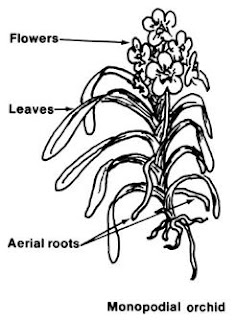
aerial root
A root emerging above the soil level. aerobic Active in the presence of free oxygen.
aeroponics
A variation of hydroponics that involves the misting of plant roots with nutrient solution.
after-ripening
The seed maturation process that must be completed before germination can occur.
aggergate fruit
A group of small fruits derived from several ovaries within a single flower.
aggregation
The process by which individual particles of sand, silt and clay cluster and bind together to form soil peds.
alkaline
Refers to medium or nutrient solution with a high pH; any pH over 7 is considered alkaline.
alkaline soil
Soil with a pH above 7 on a pH scale of 0 to 14. The higher the reading, the more alkaline the soil. See pH.
alkaloid
A nitrogen-containing compound frequently used as a chemical defense by plants.
allele
Different forms of the same gene; allele "A" may produce a tall plant, while allele "a" gives a short plant.
allelopathy
The excretion by some plants of compounds from their leaves and/or roots that inhibit the growth of other plants.
ammonium (NH4+)
A plant-available form of nitrogen contained in many fertilizers and generated in the soil by the breakdown of organic matter. See nitrogen cycle.
anaerobic
Active in the absence of free oxygen.
angiosperm
A member of a class of plants characterized by the formation of flowers and seeds in fruits.
anion
A negatively charged ion. Plant nutrient examples include nitrate (NO3-), phosphate (H2PO4-), and sulfate (SO42-). See cation.
annual
A plant that completes its life cycle in one growing season.
annual ring
A cylinder of secondary xylem added to the wood in a single growing season.
antagonism
The effect of a deficiency or toxicity of an element that restricts or interferes with the uptake.
anther
The pollen-bearing part of a flower's male sexual organ. The filament supports the anther; together they are referred to as the stamen.
anthocyanin
A blue, violet, or red flavonoid pigment found in plants.
anvil pruner
A pruning tool that cuts a branch between one sharpened blade and a flat, anvil-shaped piece of metal. These have a tendency to crush rather than make a smooth cut.
aquaponics
The integration of aquaculture (the raising of marine animals, such as fish) with hydroponics; the waste products from the fish are treated and then used to fertilize hydroponically growing plants. Visit our Aquabundance Aquaponic Systems.
apex
The tip of a stem or root.

apical bud
A bud at the tip of a stem.
apical dominance
The inhibition of lateral bud growth by the presence of the hormone auxin in a plant's terminal bud. Removing the growing tip removes auxin and promotes lateral bud break and subsequent branching, usually directly below the cut.
apical meristem
A region of actively dividing cells at the tip of a growing stem or root.
arboretum
An area devoted to specimen plantings of trees and shrubs.
asexual reproduction
See vegetative propagation.
aspect
Direction of exposure to sunlight.
assimilation
The building of cell matter from inorganic and organic materials (carbohydrates and sugars).
atomic weight
The relative weight of an atom.
attractant
A material that lures pests.
autotrophic nutrition
A form of nutrition in which complex food molecules are produced by photosynthesis from carbon dioxide, water, and minerals.
auxin
One of the best known and most important plant hormones. Most abundantly produced in a plant's actively growing tips. Generally stimulates growth by cell division in the tip region and by cell elongation lower down the shoot. Growth of lateral buds is strongly inhibited by the normal concentration of auxin in the growing tip. Visit our selection of plant hormones.
available water supply
Soil water that is available for plant uptake. Excludes water bound tightly to soil particles.
axil
The upper angle formed by a leaf's stalk (petiole) and the internodes above it on a stem.
axillary bud
A bud that forms on an axil.
axillary bud primordium
An immature axillary bud.
B
bacillus thuringiensis (Bt)
A bacterium used as a biological control agent for many insect pests; primarily mosquitoes, fungus gnats, and caterpillars. Take a look at Mosquito Dunks.
bacterial soft rot
See botrytis.
bacterium
A single-celled microscopic organism having a cell wall but no chlorophyll. They reproduce by cell division.
balled and burlapped (B&B)
A plant dug with soil. The root ball is enclosed with burlap or a synthetic material.
band
To apply a pesticide or fertilizer in a strip over or along each crop row.
bare-root (BR)
A plant with little or no soil around it's roots; a common method of selling deciduous plants and small evergreens.
bark
All the tissues, collectively, formed outside the vascular cambium of a woody stem or root.
basal
(1) At or near the base of a branch or trunk. (2) At or near a plant's crown.

basal break
New growth that develops at the base of a branch or near a plant's crown.
beneficial insect
An insect that helps gardening efforts. May pollinate flowers, eat harmful insects or parasitize them, or break down plant material in the soil, thereby releasing nutrients. Some insects are both harmful and beneficial. For example, butterflies can be pollinators in their adult form, but destructive in their larval (caterpillar) form. Visit our selection of beneficial insects.
berry
The fleshy fruit of cane fruits, bush fruits, and strawberries.
biennial
A plant that germinates and produces foliage and roots during its first growing season, then produces flowers and seeds and usually dies during its second growing season.
biennial bearing
Producing fruit in alternate years.
biosolids
A by-product of wastewater treatment sometimes used as a fertilizer.
blade
The flattened part of a leaf.
blanch
To exclude light from plants or parts of plants to render them white or tender. Often done to cauliflower, endive, celery, and leeks.
blight
Rapid, extensive discoloration, wilting, and death of plant tissue.
bloom booster
Fertilizer high in phosphorus (P) that increases flower yield. Check out Grotek Monster Bloom Booster.
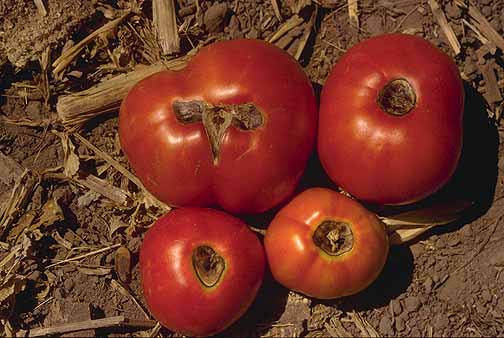
blossom-end-rot (BER)
A physiological and nutritional disorder on fruit creating a black, leathery, sunken appearance on the blossom end of the fruit – often associated with poor watering, root death, and calcium deficiency. Check out Technaflora MagiCal to prevent blossom-end-rot.
blotch
A blot or spot (usually superficial and irregular in shape) on leaves, shoots, or fruit.
bole
See trunk.
bolting
Producing seeds or flowering prematurely, usually due to heat. For example, cool-weather crops such as lettuce bolt during the summer. Leaf crops are discouraged from bolting by removal of flower heads. See deadhead.
bonsai
One of the fine arts of gardening; growing carefully trained, dwarfed plants in containers selected to harmonize with the plants. Branches are pruned and roots trimmed to create the desired effect. botanical insecticide An insecticide, such as rotenone or pyrethrum, derived from a plant. Most botanicals biodegrade quickly. Most, but not all, have low toxicity to mammals.
botrytis
A fungal disease promoted by cool, moist weather. Also known as gray mold or fruit rot.
bract
A modified leaf, usually small, but sometimes large and brightly colored, growing at the base of a flower or on its stalk. Clearly seen on dogwoods and poinsettias.
bramble
A spiny cane bush with berry fruits (e.g., raspberries and blackberries).
branch
A subsidiary stem arising from a plant's main stem or from another branch.
break
(1) Any new growth coming from a bud. (2) See bud break.
broadcast
(1) To sow seed by scattering it over the soil surface. (2) To apply a pesticide or fertilizer uniformly to an entire, specific area by scattering or spraying it.
broadleaf evergreen
A non-needled evergreen.
British Thermal Unit (BTU)
Amount of heat required to raise the temperature of 1 pound of water 1°F.
bud
A small protuberance on a stem or branch, sometimes enclosed in protective scales, containing an undeveloped shoot, leaf, or flower.
bud break
The resumption of growth by a resting bud.
bud head
A swollen or enlarged area where a bud was grafted to a stock.
bud scale
A modified leaf that forms a protective covering for a bud.
bud sport
See mutation.

bud union
The suture line where a bud or scion was grafted to a stock. Sometimes called the graft union.
budding
The grafting of a bud onto stock of a different plant. The bud is the scion.
budstick
A shoot or twig used as a source of buds for budding.
buffering action
The ability of a nutrient solution or raw water to resist changes in pH
bulb
An underground storage organ consisting of a thin, flattened stem surrounded by layers of fleshy, dried leaf bases. Roots are attached to the bottom. See corm, tuber, rhizome.
bulbil
A small bulb-like organ that sometimes forms in place of flowers.
bulblet
(1) An underground bulbil. (2) A tiny bulb produced at the base of a mother bulb.
buttress root
An enlarged, aboveground root giving support to a tree trunk.
C
calcium carbonate (CaCO3)
A compound found in limestone, ashes, bones, and shells; the primary component of lime. Check out Xtreme Gardening CalCarb.
callus
Tissue that develops when cambium or other meristematic tissue is wounded.
calorie
Amount of heat required to raise the temperature of 1 cubic centimeter of water 1°C.
calyx
The collective term for the sepals (the cup, usually green, between a flower and its stem).
cambium
The living, growing layer of cells between the xylem and phloem. In woody plants, it is located just beneath the bark.
candelabrum
A strong, dominant rose cane with accelerated growth that originates from a bud union and explodes with many blooms.
candle
On a pine tree, new terminal growth from which needles emerge.
cane
The externally woody, internally pithy stem of a bramble or vine.
canker
A localized lesion on a limb or trunk, usually due to disease or injury. Part of the bark or wood appears to be eaten away or is sunken.
canopy
(1) The top branches and foliage of a plant. (2) The shape-producing structure of a tree or shrub.
capillary force
The action by which water molecules bind to the surfaces of soil particles and to each other, thus holding water in fine pores against the force of gravity.
capillary water
Water held in the tiny spaces between soil particles or between plant cells.
capitulum
(1) A dense, short, compact cluster of sessile flowers (stalkless and attached directly at the base), as in composite plants or clover. (2) A very dense grouping of flower buds, as in broccoli.
carotene
A orange-yellow pigment located in the chloroplasts.
caterpillar
See larva.
catfacing
Disfigurement or malformation of a fruit. Fruits typically affected include tomatoes and strawberries. Although not fully understood, catfacing is thought to be caused by insects or adverse weather during fruit development.
cation
A positively charged ion. Plant nutrient examples include calcium (Ca++) and potassium (K+). See anion.
cation exchange capacity (CEC)
A soil's capacity to hold cations as a storehouse of reserve nutrients.

cell
The smallest structure in a plant.
central leader
(1) A trunk or stem extending up through the axis of a tree or shrub and clearly emerging at the top. (2) A system of pruning that uses the central leader as a basic component.
cell wall
The outer covering of a plant cell.
cellular respiration
The chemical breakdown of food substances, resulting in the release of energy.
cellulose
A plant substance forming part of the cell wall.
cercus
A thread-like or sometimes forceps-like tail near the tip of an insect's abdomen (usually a pair). Plural: cerci.
chelate
A complex organic substance that holds micronutrients, usually iron, in a form available for absorption by plants. Check out Sequestrene Iron Chelate.
chlorophyll
The green pigment in plants. Responsible for trapping light energy for photosynthesis.
chloroplast
A specialized component of certain cells. Contains chlorophyll and is responsible for photosynthesis.
chlorosis
An abnormal yellowing of a leaf.
chiller
A refrigeration unit used to reduce the temperature of water or nutrient solution.
chromosome
A threadlike structure within each living cell which contains the cell's genetic material.
cladode
A flattened stem performing the function of a leaf, as in a cactus pad.
cladosporium
Any of several fungal diseases that afflict plants; commonly called leaf mold.
clay
The smallest type of soil particle (less than 0.002 mm in diameter).
climber
A plant that climbs on its own by twining or using gripping pads, tendrils, or some other method to attach itself to a structure or another plant. Plants that must be trained to a support are properly called trailing plants, not climbers.
cloche
A plastic, glass, or plexiglas plant cover used to warm the growing environment or protect plants from frost.
clone
A plant group whose members have all been derived from a single individual through constant propagation by vegetative (asexual) means, e.g. by buds, bulbs, grafts, cuttings, or laboratory tissue culture. Visit our selection of cloning and propagation products.

closed system
A hydroponic system, like nutrient film technique (NFT) systems, that recirculates the nutrient solution. C:N ratio The ratio of carbon (C) to nitrogen (N) in organic materials. Materials with a high C:N ratio (high in carbon) are good bulking agents in compost piles, while those with a low C:N ratio (high in nitrogen) are good energy sources.
cold composting
A slow composting process that involves simply building a pile and leaving it until it decomposes. This process may take several months or longer. Cold composting does not kill weed seeds or pathogens.
cold frame
A plastic-, glass-, or plexiglas-covered frame that relies on sunlight as a source of heat to warm the growing environment for tender plants. Check out the Juwel Double Cold Frame.
cold hardening
The process where plants prepare for low temperatures.
cole crops
A group of vegetables belonging to the cabbage family; plants of the genus Brassica, including cauliflower, broccoli, cabbage, turnips, and brussels sprouts.
coleoptera
An insect family made up of species having horny front wings that fit over their hindwings. Includes beetles and weevils.
collar
A swollen area at the base of a branch where it connects to a trunk. Contains special tissue that prevents decay from moving downward from the branch into the trunk. See shoulder ring.
compaction
Pressure that squeezes soil into layers that resist root penetration and water movement. Often the result of foot or machine traffic.
companion planting
The practice of growing two or more plants together in the hope that the combination will discourage disease and insect pests.
compatible
Different varieties or species that set fruit when cross-pollinated or make a successful graft union when intergrafted. See pollenizer.
complete flower
A flower having all of the normal flower parts.
complete metamorphosis
A type of insect development in which the insect passes through the stages of egg, larva, pupa, and adult. The larva usually is different in form from the adult. See simple metamorphosis.
composite head
A inflorescence composed of many tightly-packed, small, ray and disc flowers.
compost
The product created by the breakdown of organic waste under conditions manipulated by humans. Used to improve both the texture and fertility of garden soil. See humus. Visit our selection of compost bins and red wiggler compost worms.
compound bud
More than one bud on the same side of a node. Usually, unless growth is extremely vigorous, only one of the buds develops, and its branch may have a very sharp angle of attachment. If it is removed, a wider angled shoot usually is formed from the secondary (accessory) bud. Ashes and walnuts are examples of plants that typically have compound buds.
compound leaf
A leaf in which the blade is divided into separate leaflets.
conductivity
The scale, described as electrical conductivity (EC) or conductivity factor (CF), that is used to measure the strength of nutrient solution. Visit our selection of solution testing equipment.
conifer
A cone-bearing tree or shrub, usually evergreen. Pine, spruce, fir, cedar, yew, and juniper are examples.
conk
A fungal fruiting structure (e.g., shelf or bracket fungi) formed on rotting woody plants.
contact pesticide
A pesticide that kills on contact. Visit our selection of pesticides.
controlled environmental agriculture (CEA)
The growing of plants in structures as greenhouses that permit the regulation of optimum environmental conditions for the crop year-round regardless of ambient weather conditions.
cordon
(1) A method of espaliering fruit trees, vines, etc. to horizontal, vertical, or angles wire or wooden supports so maximum surface is exposed to the sun, resulting in maximum fruit production. (2) A branch attached to such a support.
cork
The protective outer tissue of bark.

cork cambium
A layer of cells in the cambium that gives rise to cork.
corm
An underground storage organ consisting of the swollen base of a stem with roots attached to the underside. Crocus and gladiolus are examples of plants that form corms. See bulb, tuber, rhizome.
cormel
A small, underdeveloped corm, usually attached to a larger corm. See bubil and bulblet.
cornicle
A short, blunt horn or tube (sometimes button-like) on the top and near the end of an aphid's abdomen. Emits a waxy liquid that helps protect against enemies.
corolla
Collectively, all of a flower's petals.
cortex
Cells that make up the primary tissue of roots or stems.
corymb
A usually flat-topped flower cluster in which the individual flower stalks grow upward from various points on the main stem to approximately the same level.
cotyledon
A seed leaf; the first leaf from a sprouting seed. Monocots have one cotyledon; dicots have two.
cover crop
A crop dug into the soil to return valuable organic matter and nitrogen to the soil. Legumes such as clover, cowpeas, and vetch are common cover crops. Also called green manure.
critical photoperiod
The maximum day length a short-day plant, and the minimum day length a long-day plant, require to initiate flowering.
cropping cycle
The time period during which the plant grows from seeding until final harvest and its subsequent removal.
cross-pollination
The fertilization of a ovary on one plant with pollen from another plant, producing an offspring with a genetic makeup distinct from that of either parent. See pollenizer.
crotch angle
The angle formed between a trunk and a main scaffold limb. The strongest angle is 45° to 60°.
crown
(1) Collectively, the branches and foliage of a tree or shrub. (2) The thickened base of a plant's stem or trunk to which the roots are attached.
cultivar
A specially cultivated variety of a plant that most often is reproduced vegetatively. For example, 'Transparent' is a cultivar of apple. See variety.

cuticle
(1) A relatively impermeable surface layer on the spidermis of leaves and fruits. (2) The outer layer of an insect's body.
cutin
(1) A waxy substance on plant surfaces that tends to make the surface waterproof and can protect leaves from dehydration and disease. (2) A waxy substance on an insect's cuticle that protects the insect from dehydration.
cutting
A piece of leaf, stem, or root removed from a plant and prompted to develop into a new plant that is genetically identical to the parent plant.
cyme
A flower stalk on which the florets start blooming from the top of the stem and progress toward the bottom.
cyst
The swollen, egg-containing female body of certain nematodes. Can be seen on the outside of infected roots.
cytokinin
A plant hormone primarily stimulating cell division. Visit our selection of plant hormones.
cytoplasm
The living protoplasm of a cell, excluding the nucleus.
cytoplasmic membrane
The membrane enclosing the cytoplasm.
D
damping-off
A disease caused by many different organisms. In the most conspicuous cases, a seedling's stem collapses at or near the soil surface, and the seedling topples. Another type rots seedlings before they emerge from the soil or causes seeds to decay before germinating.
day-neutral plant
A species capable of flowering without regard to day length. See short-day plant, long-day plant.
deadhead
To remove individual, spent flowers from a plant for the purpose of preventing senescence (going dormant) and prolonging blooming. For effective results, the ovary behind the flower must be removed as well.
deciduous
A plant that sheds all of its leaves annually.
decomposition
The breakdown of organic materials by microorganisms.
deep flow/raft culture
A hydroponic system commonly used for lettuce production in hot climates where the plants are supported on top of a bed of nutrient solution by Styrofoam boards floating on the solution.
defoliation
The unnatural loss of a plant's leaves, generally to the detriment of its health. Can be caused by high winds, excessive heat, drought, frost, chemicals, insects, or disease.
dehorning
A drastic method of pruning a neglected tree or shrub. Entails the removal of large branches, especially high in the crown, a few at a time over several seasons.
dermaptera
An insect family made up of species having chewing mouthparts and a pair of large, forceps-like appendages near the tail. Wingless or with one or two pairs of inconspicuous wings. Earwigs are an example.
desiccation
Drying out of tissue. determinate
A plant growth habit in which the stems stop growing at a certain height and produce a flower cluster at the tip. Determinate tomatoes, for example, are short, early-fruiting, have concentrated fruit set, and do not require staking. See indeterminate.
dethatch
To remove thatch (a tightly intermingled layer of stems, leaves, and roots, living and dead, that forms between the soil surface and green vegetation of grass).
diageotropic
Horizontal growth of a plant part.
diatomaceous earth
The fossilized remains of diatoms (a type of tiny algae). Check out the Viagrow™ Diatomaceous Earth.

dicot
A plant having two cotyledons (seed leaves).
dicotyledon
See dicot.
dieback
Progressive death of shoots, branches, or roots, generally starting at the tips.
differentiation
A change in composition, structure, or function of cells and tissues during growth.
dioecious
A plant species having male and female flowers on separate plants. An example is holly. See monoecious.
disbud
The selective removal of some flower buds so the remaining buds receive more of the plant's energy and produce larger, showier flowers. Roses, chrysanthemums, and camellias often are disbudded.
disc flower
A small, tubular flower in the center of a composite head.
division
The breaking or cutting apart of a plant's crown for the purpose of producing additional plants, all genetically identical to the parent plant.
DNA Deoxyribonucleic acid
The substance that the genes which carry genetic information is made of.
dominate species
The most abundant species in a plant community.
dormancy
The annual period when a plant's growth processes greatly slow down.
dormant bud
A bud formed during a growing season that remains at rest during the following winter or dry season. If it does not expand during the following growing season, it is termed a latent bud.
dormant oil
A horticultural oil applied during the dormant season to control insect pests and diseases.
double, semidouble
A flower with more than the normal number of petals, sepals, bracts, or florets. May be designated botanically by the terms flore pleno, plena, or pleniflora. double worked Grafted twice, i.e. grafted to an intermediate stock.
drainage
The ability of soil to transmit water through the surface and subsoil.

drip irrigation
A type of irrigation system by which each plant is fed individually with a small drip tube and the flow is regulated by an emitter commonly used in most hydroponic systems. Visit our selection of drip irrigation products.
drip tip
A pointed leaf tip helping to drain water from the leaf surface.
drip zone
The area from the trunk of a tree or shrub to the edge of its canopy. Most, but not all, of a plant's feeder roots are located within this area.
dripline
An imaginary line on the ground directly beneath the outermost tips of a plant's foliage. Rain tends to drip from leaves onto this line.
drupe fruit
See stone fruit.
dwarfed
Restricted plant size without loss of health and vigor.
deep water culture (DWC)
A hydroponic method of plant production by means of suspending the plant roots in a solution of nutrient-rich, oxygenated water, also known as bubbleponics. ebb-and-flow a hydroponic system in which the plants are sub-irrigated periodically and the nutrient solution drains back to a central cistern for subsequent cycles.
E
ebb-and-flow
A hydroponic system in which the plants are sub-irrigated periodically and the nutrient solution drains back to a central cistern for subsequent cycles
ecology
The science of relationships between organisms and their environment.
economic threshold
The level at which pest damage justifies the cost of control. In home gardening, the threshold may be aesthetic rather than economic.
egg
A female sex cell.
electrical conductivity (EC)
A measure of the ability of a nutrient solution to conduct electricity, which is dependent upon the ion concentration and nature of the elements present. Visit our selection of solution testing equipment.
emasculate
To remove a flower's anthers.
embryo
The dormant, immature plant within a seed; the "germ" referred to in wheat germ.
embryo culture
See tissue culture.
enation
Epidermal outgrowths on leaves or stems.
endodermis
A layer of cells in roots between the cortex and the vascular tissues.

endosperm
The nutritive tissue within the seed of a flowering plant. Surrounds and is absorbed by the embryo.
enzyme
A biological catalyst that aids in a specific biochemical process, such as converting food from one form to another.
epidermal hair
A filament of cells arising from an epidermal cell.
epidermis
The outermost layer of cells covering a plant's leaves, roots, and young parts.
epigeous germination
Seed germination in which the cotyledons are raised above the soil surface.
epinasty
An abnormal downward-curving growth or movement of a leaf, leaf part, or stem.
epiphyte
A plant growing on another plant for support.
espalier
The training of a tree or shrub to grow flat on a trellis or wall. Espalier patterns may be very precise and formal or more natural and informal.
ethylene
A gaseous plant hormone (C2H4) produced in abundance by ripening fruits and damaged tissues.
etiolation
The condition where a plant is grown in darkness, resulting in pale and elongated stems and underdeveloped leaves.
evapotranspiration
The loss of water from a plant through evaporation and transpiration; critical to the uptake of minerals and cooling of the plant through movement of water within the entire plant.
evergreen
A plant that never loses all of its foliage at the same time.
excise
To remove or extract, as an embryo from a seed or ovule.
excurrent
A tree form in which the main trunk remains dominant with small, more or less horizontal branches. Fir and sweetgum are examples.
exfoliating
Peeling off in shards or thin layers, as in bark from a tree.
exoskeleton
The outer support structure of an insect.
exotic
Non-native.
F
F1, F2, F3, etc.
Filial generation - the F1 generation is the result of crossing two different varieties; a cross of two F1 plants produces F2 seed; and so on.
fallow
To keep part of a garden unplanted or in a cover crop during the growing season.
family
A broad group of plants with common characteristics.
fasciation
Distortion of a plant that results in thin, flattened, and sometimes curved shoots.
feeder roots
Fine roots and root branches with a large absorbing area (root hairs). Responsible for taking up the majority of a plant's water and nutrients from the soil.
fermentation
The partial breakdown of food molecules to yield ethyl alcohol, carbon dioxide, and energy. Fermentation occurs in the absence of oxygen.
fertility (soil)
The presence of minerals necessary for plant life.
fertilization
(1) The fusion of male and female germ cells following pollination. (2) The addition of plant nutrients to the environment around a plant.
fertilizer
A natural or synthetic product added to the soil or sprayed on plants to supply nutrients. Visit our wide selection of fertilizers.
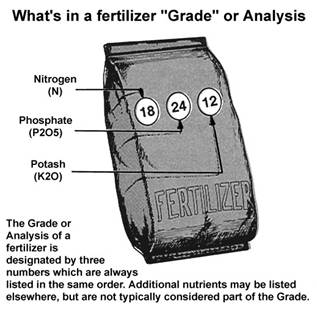
fertilizer analysis
The amount of nitrogen (N), phosphorous (as P2O5), and potassium (as K2O) in a fertilizer, expressed as a percentage of total fertilizer weight. On the N-P-K fertilizer label, the percentage by weight of nitrogen (N) is always listed first, phosphorous (P) second, and potassium (K) third.
fiber
A long, thick-walled cell that dies at maturity.
fibrous root
A root system that branches in all directions, often directly from the plant's crown, rather than branching in a hierarchical fashion from a central root. See taproot.
filament
The stalk supporting a flower's anthers.
flagging
Loss of turgor and drooping of plant parts, usually as a result of water stress.
floricane
Second-year growth of caneberries. Produces fruit on laterals.
flower
The reproductive branch or structure of an angiosperm plant.
flower cluster/truss
A group of flowers that form from the stem of tomato plants which when pollinated produce the fruit.
foliar fertilization, foliar feeding
Fertilization of a plant by applying diluted soluble fertilizer, such as fish emulsion or kelp, directly to the leaves.
food
An organic substance that provides energy and body-building materials, especially carbohydrates, fats, and proteins.
force
To bring a plant into early growth, generally by raising the temperature or transplanting it to a warmer situation. Tulips and paperwhites are examples of plants that often are forced.
form
(1) A naturally-occurring characteristic different from other plants in the same population. (2) The growth habit (shape) of a plant.
formal
(1) A garden that is laid out in precise symmetrical patterns. (2) A flower, such as some camellias, that consist of layers of regularly overlapping petals.
frond
Specifically, the foliage of ferns, but often applied to any foliage that looks fern-like, such as palm leaves.
fruit
The edible portion of a plant that is closely associated with a flower. Botanically, a fruit is a ripened, mature ovary.
fruiting habit
The location and manner in which a fruit is borne on woody plants.
fungicide
Any material capable of killing fungi. Sulfur and copper sulfate are two common mineral fungicides. Visit our selection of fungicides.
fungus
A plant organism that lacks chlorophyll, reproduces via spores, and usually has filamentous growth. Examples are molds, yeasts, and mushrooms. Check out the Xtreme Gardening Mykos Pure Fungi Organic Fertilizer.

fusarium
Any of several fungal diseases that afflict plants; commonly called dry rot or wilt
G
gall
A growth on plant stems or leaves caused by abnormal cell growth stimulated by the sucking of some insects (e.g., aphids) or by viral, fungal, or bacterial infection.
gamete
A sex cell, male or female.
gene
A unit of genetic inheritance. generative growth reproductive phase of a plant in which it produces flowers and fruit.
genus
A group of related species, each of which is distinct and unlikely to cross with any other. A group of genera forms a family, and a group of families forms an order. See species.
geotropism
The turning or curving of a plant's parts in response to gravity. A root growing downward is an example. Geotropism is controlled largely by the hormone auxin.
germination
The initial sprouting stage of a seed. Check out the Viagrow™ Progagation and Cloning Kit.
germination inhibitor
A chemical substance preventing seed germination.
girdling
The cutting, removing, or clamping of bark all the way around a trunk or branch. Sometimes, girdling is done deliberately to kill an unwanted tree, but often it results from feeding by insects or rodents. Wires and ties used to support a tree can cause girdling, as can string trimmers.
glabrous
Hairless, but not necessarily smooth.
glaucous
Covered with a grayish, bluish, or whitish waxy coating that is easily rubbed off. Blue spruce needles are an example of glaucous leaves.
gradual metamorphosis
See simple metamorphosis.
graft union
See bud union.
grafting
The act of inserting a shoot or bud of one plant into the trunk, branch, or root of another, where it grows and becomes a permanent part of the plant.
gravitational water
Water in excess of a soil's capacity. Drains downward to groundwater.
green cone
An enclosed composting unit often used for composting food waste.
green manure
See cover crop.
groundcover
Plants used in lieu of grass for holding soil and providing leaf texture.
growing medium
Materials that are sometimes used in hydroponic growing to support the plant's roots and, sometimes, to hold nutrient.
growing season
The period between the beginning of growth in the spring and the cessation of growth in the fall.
growth regulator
A compound applied to a plant to alter its growth in a specific way. May be a natural or synthetic substance. See hormone. Check out the Humboldt Country's Own Bushmaster.
guard cell
Leaf epidermal cells that open and close to let water, oxygen, and carbon dioxide pass through the stomata.
gum
A sticky, water-soluble plant secretion that hardens on contact with air. guttation plants having high root pressure under high relative humidity conditions will exude water at their leaf margins through specialized cells.
gutter NFT
A nutrient film technique water culture system in which plants are grown in small gutters or channels. Check out the Aeroflo 36 site Aeroponics System.
gymnosperm
A member of a class of plants that forms seeds in an exposed condition, often in cones.